Restoring Soul: Why Heritage Buildings Matter
Every old building has a story carved into its walls — a memory of the people, industry, and community that once shaped its everyday life.
Across Kent and East Sussex, heritage buildings are being carefully preserved and thoughtfully adapted, not frozen in time but evolving in to new uses. Heritage restoration isn’t simply about saving old structures; it’s about restoring their character and future-proofing them for generations to come.
Old Walls, New Futures: Ashford’s Heritage Buildings in Transition
Some of our most compelling heritage stories also come from the larger industrial towns and cities of the 19th and early 20th centuries, places shaped by rapid growth, engineering ambition, and a belief that buildings should express pride as much as purpose. Even structures built purely for industry were often carefully designed, with architects balancing utility and beauty. Much of this came from the Victorian and Edwardian design ethos, where form and function worked hand-in-hand. Flour mills, engine sheds, water towers, pumping stations, and factories were engineered for performance but still dressed in stone or brickwork, arches, cornices, and rhythmic fenestration, an architectural language signalling confidence and craftsmanship.
By the late 20th century, the tide had begun to turn. New materials, new structural techniques, and evolving philosophies reshaped the way we built. Movements like Bauhaus, Modernism, High-tech, and later Brutalism championed honesty in materials, structural clarity, and functional efficiency. Architecture became more direct, sometimes starkly so, as towns and cities reinvented themselves for the car era and the service economy. Industries left town centres, following ring roads and dual carriageways to industrial estates on the outskirts. In their place, offices, housing, retail, and leisure stepped in, marking a shift from heavy industry to a softer, service-based urban life.
Perhaps no building encapsulates this shift better than the Lloyd’s of London building, designed by Richard Rogers, a masterpiece of “inside-out” architecture, known as Bowellism, in the heart of the City. Built in the 1980s, it placed all services, lifts, ducts, and staircases on the outside, freeing the interior into one vast, flexible space. Even the cranes used during construction were left in place to assist with maintenance and contribute to the aesthetic. The glass lifts climbing visibly up the exterior and the soaring atrium crowned by a skylight criss-crossed by elevators became symbols of transparency and modern efficiency. I have a personal connection to this space from a past life working in the City, setting up IT equipment inside the building, which gave me a unique perspective on its scale and ingenuity. Coupled with my studies in architectural history, it’s no surprise that this building continues to fascinate me. And yet, despite its futuristic expression, the building doesn’t entirely abandon its past: the famous Committee Room, an ornate 18th-century Robert Adam dining chamber, was dismantled from the previous Lloyd’s building and reconstructed piece by piece on the 11th floor, quietly anchoring modernity to heritage.
This long arc, from the ornamented industrial architecture of the 19th century, where function was paramount but form was carefully considered to enhance and celebrate it, through the 20th-century philosophies that increasingly put function first, explains why towns like Ashford are full of extraordinary buildings with layered identities. Some have been reused, some demolished, and some sit in limbo, waiting for someone to see their potential again. Ashford’s flour mill, railway works, and other industrial relics are part of this lineage: stemming from an era when functional necessity inspired architectural care, transformed in a later period when utility dominated design, and now standing ready for thoughtful reinvention.
I recently came across a post from the Coachworks community about their work on the Flour Mill, and it instantly drew me in. It set my mind wandering back to the Newtown Railway Works and the wider shifts that left these once-crucial buildings redundant as Ashford’s infrastructure and industry evolved. Whilst we think of Ashford as a place to shop or catch a train, there is much to appreciate in terms of the town’s industrial past or the way its built landscape has changed over time. Its heyday may have waned as a market town, but there’s a new spark gathering, a sense that Ashford is poised for another reinvention.
The Flour Mill, built in 1847, was once an industrial linchpin, processing grain brought in by rail and supporting the local market economy. Generations knew it as a place of work, until its reinvention as a nightclub in the late 20th century gave it a second life. When the music eventually stopped, the building fell quiet again, waiting for its next calling. It was bought by Ashford School with the intention or repurposing it for education. However, it was recently sold. Its new chapter, led by the Coachworks team, will bring the mill gently back into public life as a cultural venue and creative hub. We wish them much success in their journey, and we will be eagerly following the progress. You can read more on their blog here: Project Cornmill: Cracking Open an Old Ashford Mystery
Just across the tracks, the story of Newtown Railway Works has taken a more bittersweet turn. The expansive Victorian locomotive workshops and engine sheds were once the pulse of industrial Ashford. For many decades they built and repaired locomotives, employing thousands and defining the town’s identity. But after their closure in the 1980s, the site stood largely dormant.
For a while, hopes were high that Newtown might find new life as a film and TV studio, a creative hub that could have transformed Ashford’s industrial heritage into a modern media centre. However, the latest update from Ashford Borough Council (published July 2025) confirms that the studio proposal is no longer economically viable. The project partners have decided to shift instead toward a predominantly residential redevelopment.
That means the original plan for studios and media-linked educational facilities has been dropped, even though the site had secured significant public funding through the government’s Levelling Up Fund. This change of direction is a shame, for those of us who love the idea of giving heritage buildings bold, contemporary lives. But it doesn’t mean the end of hope for Newtown. The enabling works have already begun: the locomotive shed, engine shed, and clock tower are undergoing restoration, brickwork is being cleaned and repaired, and the site is being stabilised.
Even with the pivot to housing and mixed residential use, there remains an opportunity: to bring these old buildings back into public life, preserving their heritage and giving Ashford residents new spaces to live, work, and connect. It may not be quite the creative-industry renaissance once imagined — but it could still be a meaningful chapter in the town’s continuing story. The latest update on the Newtown Works redevelopment
Where Price Whitehead Have Stepped In: Heritage with a Community Heart
While those large industrial landmarks make the headlines, our work is most often woven into the quieter spaces that shape local life, the civic buildings, churches, chapels, and community halls that people use every day.
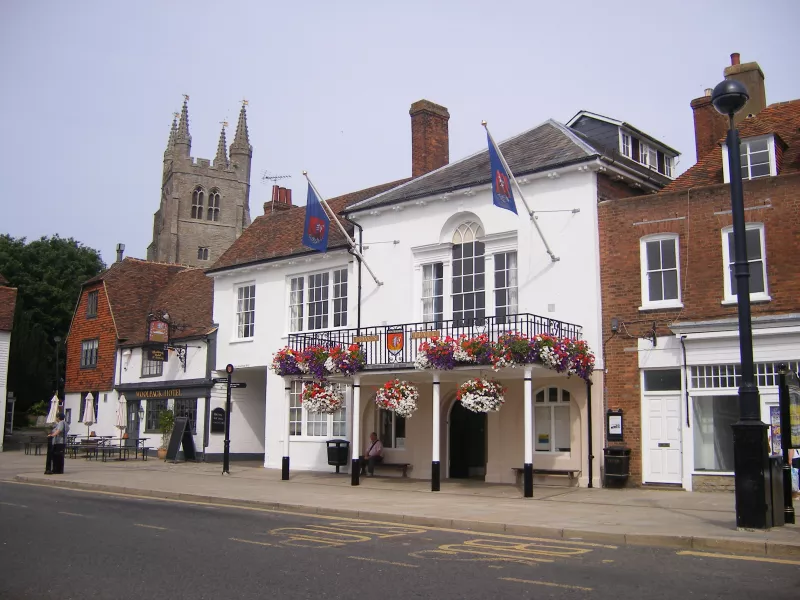
Tenterden Town Hall is one of those buildings. Standing proudly since 1791, it began its life with a market beneath and assembly rooms above, later becoming the administrative and ceremonial centre of the town. Over the centuries it hosted civic debates, public meetings, dances, concerts, and countless community celebrations, the heartbeat of the town in both official and social life.
But behind the familiar façade, the building was struggling: rising damp, outdated heating, lack of insulation, no lift, no disabled-access toilets, and a layout that limited modern use. The renovation now underway is the most comprehensive investment in its long history. Once complete, the Hall will offer improved accessibility, modern facilities, and energy-efficient upgrades, ensuring it can continue to host civic events, gatherings, and celebrations for generations to come. We were pleased to have helped guide the tendering process, ensuring the right architectural team was selected to balance Georgian heritage with modern requirements. Tenterden Town Hall Renovation Project | Tenterden Town Council
Similarly, St. Mildred’s Church, Tenterden has been given a new lease of life. A cherished landmark, its role within the community has evolved significantly over the years. Working alongside the congregation, we helped shape the extension and planning strategy by designing and achieving planning for a new wing on the North side of the building. This will allow the church to serve as both a place of worship and a flexible cultural venue. Modern amenities and improved accessibility will give the space a broader community purpose while respecting the historic fabric of the building. St Mildreds Transformation Project - Tenterden, Kent. We are pleased to be continuing to work on the project on the next stages of the deign process.
A Quiet Chapel Preparing for Its Next Chapter
Tucked away in an East Sussex village sits a modest 19th-century non-conformist chapel, the kind of simple, cherished structure that once shaped the rhythm of rural life. These chapels sprang up across Kent and Sussex during the mid-1800s, serving as gathering places for Sunday worship, choir rehearsals, community meetings, and the small but significant moments that marked each year.
What’s particularly fascinating is how little formal history many of these buildings have. Unlike large parish churches or architect-designed civic landmarks, small non-conformist chapels often left behind limited written records unless they were part of a prominent congregation or overseen by a denomination with organised archives. Their stories tend to be found instead in local memories, handwritten notes in old parish newsletters, decades-old family photographs, or the recollections of long-standing residents who remember how the chapel once fitted into village life.
Even without extensive documentation, the character of these places speaks for itself. Their brickwork, timber detailing and simple arched windows quietly record the lives of the communities that once filled them. Today, this chapel is gently stepping toward a new chapter. Plans are being explored, carefully and privately, to give it a sensitive residential use, preserving its dignity while retaining the external formal character to remain part of daily village life in its facade. We’ve been working closely with the owner in progressing designs and applying for listed building consent to ensure that whatever comes next honours the spirit of the building and the layers of community history held within its walls.
Why We Believe These Buildings Matter
Each of these projects, whether grand or modest, shows how heritage buildings can carry their stories forward rather than being left to fade. Restoring what already exists is one of the most sustainable choices we can make, reducing waste, preserving embodied carbon, and keeping our towns rooted in their unique identities.
Of course, this whimsy reinvention, and careful restoration come at a significant financial cost. Every project involves close collaboration with conservationists, archaeologists, building control, and is a delicate balancing act between preserving historic character, making the space fit for modern use, and ensuring sustainability. There’s also the conundrum of whether to fully restore and refresh a building, or simply “make good” what is needed, leaving some of the wear, patina, and imperfections intact, a choice that can help maintain the historic and social character of the space rather than making it look shiny and new.
Heritage isn’t just about looking back; it’s about giving a future to the buildings that shaped us, and doing so thoughtfully, responsibly, and creatively.
If you’re the custodian of a heritage building with its next chapter still unwritten, we’d love to share the journey with you.